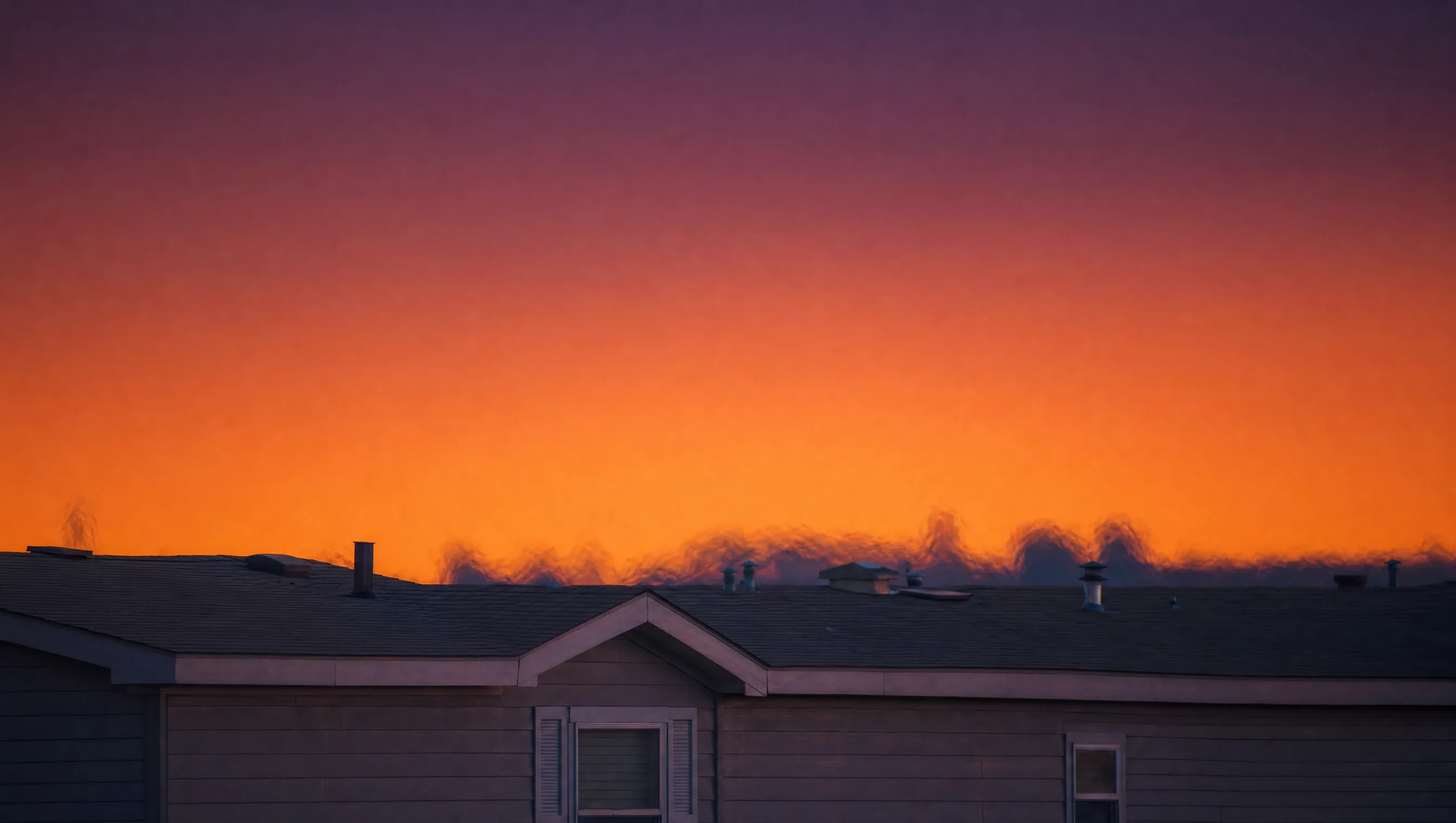

How it works / one house, one afternoon

The afternoon your air conditioner takes control.

No lectures and no diagrams of outer space. One hot house, one August afternoon — before the surface changes and after — and the exact moment the fight turns.

01 The losing fight

Two in the afternoon, and the air conditioner is losing.

It has been running since eleven and it will not catch up before dark. That is not a broken unit and it is usually not an undersized one — it is an outgunned one. The biggest surface you own has been taking sun since morning and handing it down through the ceiling faster than the machine downstairs can pull it back out. Every fix anybody has tried lives on the losing side of that arithmetic: more refrigerant, a bigger unit, blackout curtains. The one variable nobody has touched is the surface where the fight actually starts.

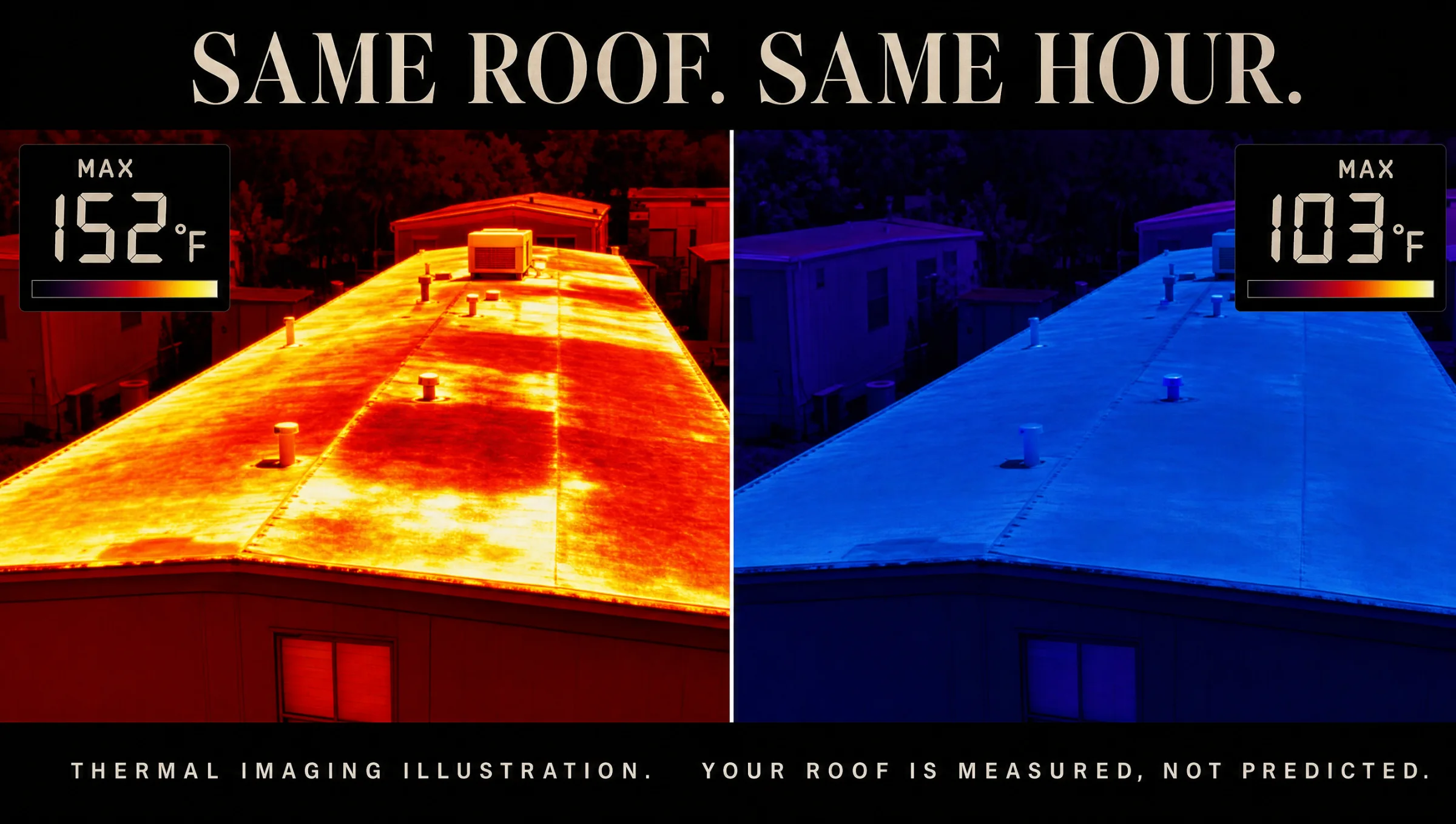
Thermal comparison of two identical roofs in the same hour: the untreated surface runs far hotter than the coated one.
Same roof type, same hour. The untreated surface is the one feeding the house.
2 PMThe worst hour

Peak load lands overhead exactly when the day peaks. The house starts losing after lunch.

Flat outWhat the unit does

Running continuously and still losing ground. It is not broken — it is outgunned.

OverheadWhere the fight starts

Not the windows, not the ducts. The largest sun-facing surface you own.

TomorrowThe rematch

The same load lands again before the structure has finished shedding today's.

02 The surface changes

Change the surface, and the fight changes size.

One coated surface, and the arithmetic upstairs is different. Most of what the sun sends is turned away on arrival instead of soaked in; the remainder that does get through is released back to the sky instead of held in the deck. The house's problem shrinks at the top before the air conditioner ever meets it. None of that is a paint-store promise — the numbers are producer-published, including the one almost nobody prints: what the surface still reads after three summers.

Published Sundown roof coating properties: 0.88 initial reflectance, 0.89 thermal emittance and 0.74 three-year reflectance.
Producer-published values for the coating — not a prediction about any particular house.
0.88Initial reflectance

Published producer value. Most of what arrives is turned away before it becomes load.

0.89Thermal emittance

What does soak in is released back to the sky instead of held in the deck.

One dayWhat it takes

Measured, specified, coated to a checked film thickness. Nobody moves out for it.

0.74Still, at three years

The published aged value. The surface keeps doing this after three summers.

03 The crossover

Now the same air conditioner can take control.

This is the moment the whole product exists for. With the load cut at the top of the house, the unit downstairs crosses from chasing the thermostat to holding it — cycling instead of running, reaching setpoint instead of apologizing for it, and the back bedroom rejoins the house. Nothing was replaced and nothing was added downstairs. The fight got smaller upstairs, and the machine you already own is finally the right size for it.

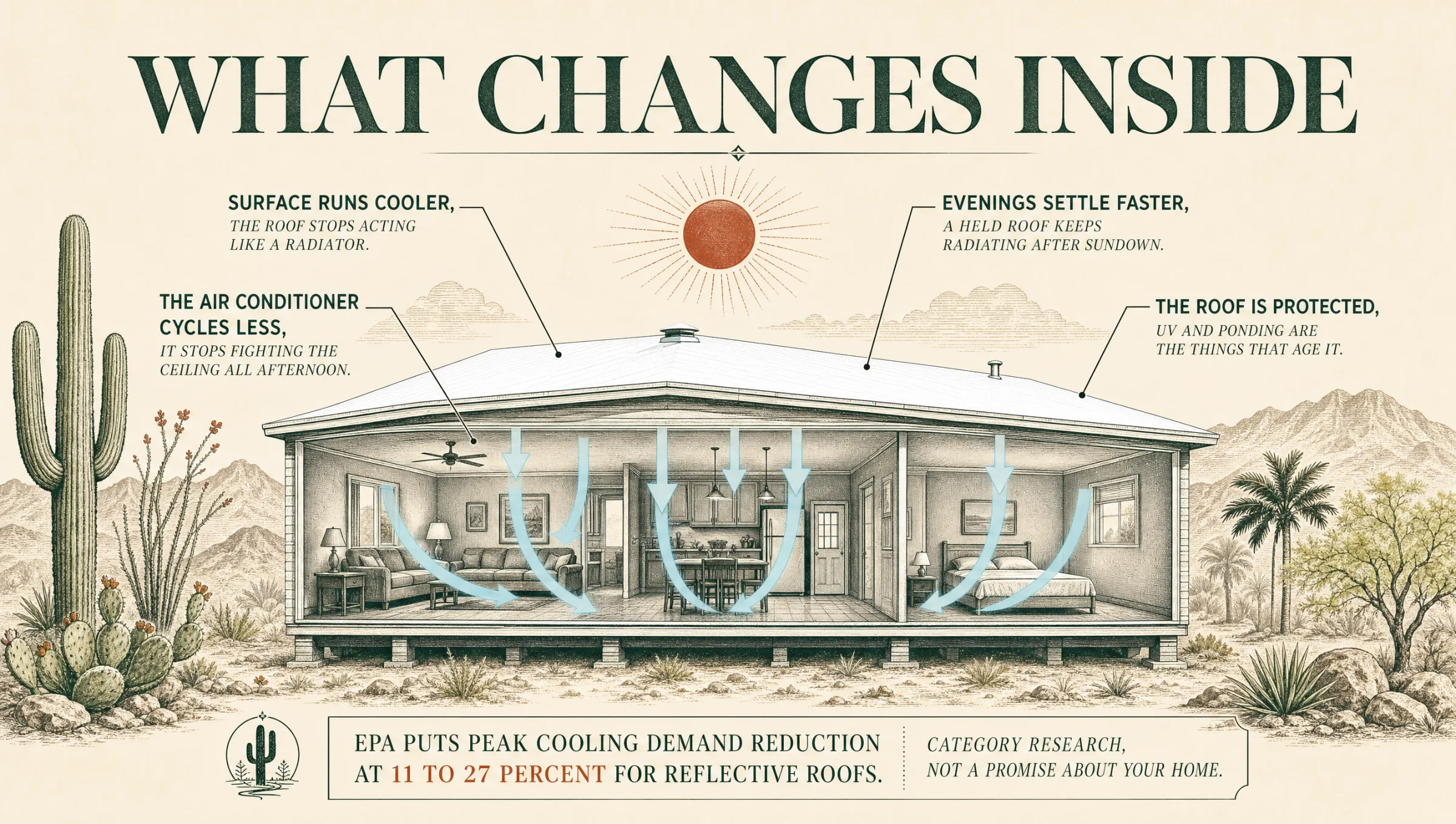
Building cutaway showing less heat crossing the roof assembly into occupied rooms, and the air conditioner cycling instead of running continuously.
The useful outcome is inside: the unit stops fighting the ceiling and starts holding the house.
CyclingNot chasing

With the load cut, the same unit reaches temperature and rests instead of running.

SetpointReached and held

The thermostat stops being a suggestion in the rooms furthest from it.

11–27%EPA, peak cooling demand

The category range for reflective roofs on air-conditioned homes. Attributed research — not a promise about your house.

Same ACNo new equipment

Nothing downstairs changed. The arithmetic upstairs did.

04 The evening after

By sundown, the house lets go of the day.

A roof that spent the afternoon absorbing keeps radiating into the bedrooms until midnight. A roof that spent it turning the load away has less to give back, so the house settles when the sun does. And because the work was measured, gated and checked, the afternoon it changed exists on paper: batch, readings, photographs, closeout. That record is what you hold at resale, at refinance, or when a neighbour asks why your place cools off and theirs does not.
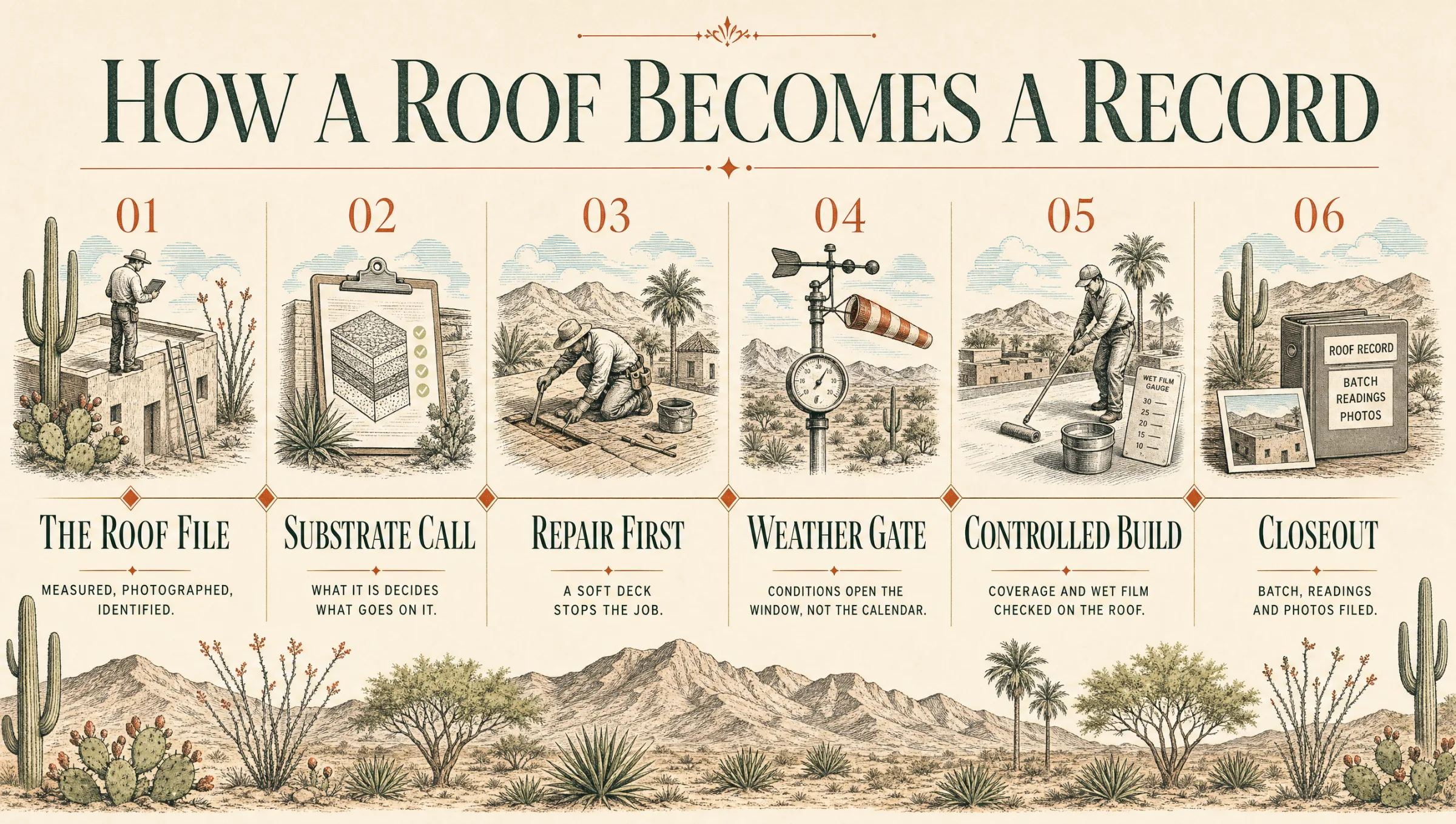
Six-stage Sundown roof record process from measured roof file through substrate review, repair, weather gate, controlled build and closeout.
One afternoon of work becomes one permanent roof record.
SundownThe house settles

Less stored in the structure all afternoon means less radiating into bedrooms at night.

FiledPhotos and readings

Before and after, on the same measurement points every time.

BatchTraced to the pail

The material on your roof ties back to the bucket it came out of.

YoursThe closeout

You hold the record — at resale, at refinance, or the next conversation that needs proof.

That is the whole story. What is left is your roof: what it is made of, what shape it is in, and how many buckets it actually takes.

The voice channel is waiting for the production ElevenLabs agent ID. The written roof planner below is fully available and saves to the same pipeline.